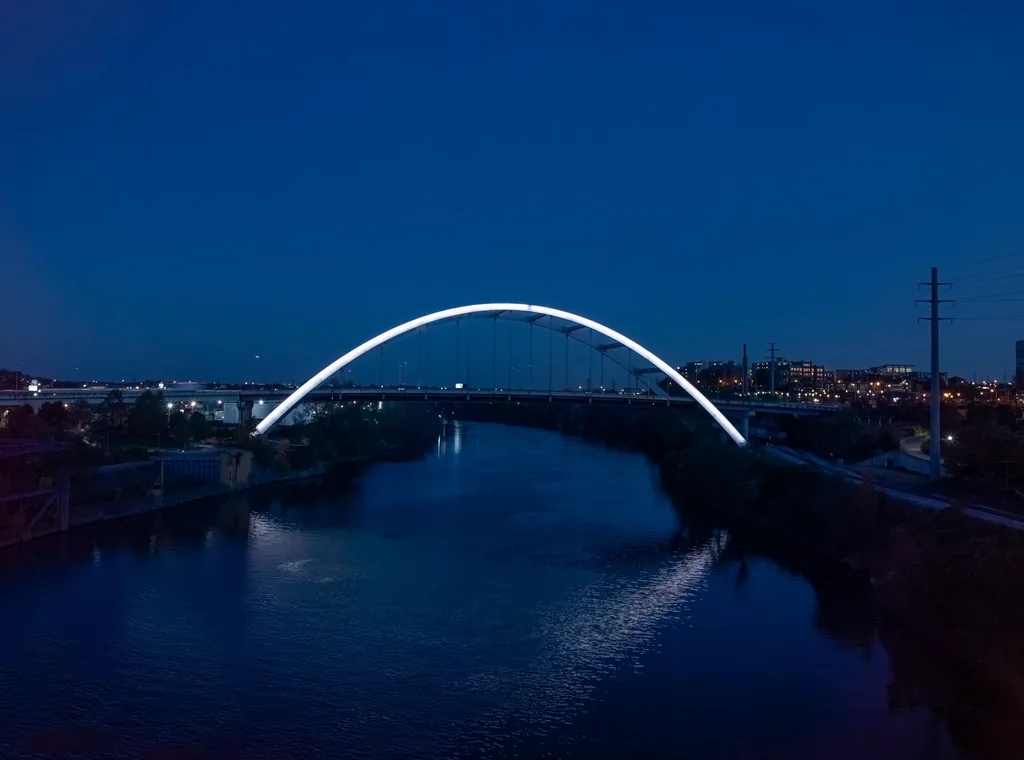
TDOT will close the James Robertson Parkway bridge over the Cumberland River from summer 2027 to summer 2029. Woodland Street and Jefferson Street are the proposed alternate routes.
The James Robertson Parkway bridge between downtown Nashville and East Nashville will close to cars and pedestrians for about two years. The Tennessee Department of Transportation said the closure of the bridge, also called the Victory Memorial Bridge, starts in summer 2027 and runs until summer 2029.
TDOT set out the timeline in a news release Thursday, Nov. 12. Nothing closes yet. Construction work is due to start in spring 2027.
Overview
- What closes: the James Robertson Parkway (State Route 6) bridge over the Cumberland River, to cars and people on foot.
- When: from summer 2027 to summer 2029. TDOT has not set an exact date.
- Why: TDOT is lowering the bridge approach and rebuilding the parkway on the east side to meet the new East Bank street grid.
- Detour: not final. TDOT’s proposed alternate routes use the Woodland Street and Jefferson Street bridges.
What TDOT is building
The project lowers the raised approach that carries the parkway onto the bridge from the east side of the river. It rebuilds James Robertson Parkway between Interstate Drive and South First Street, which will become East Bank Boulevard, according to the project page.
The project page and TDOT’s frequently asked questions sheet list the main changes:
- the roadway widens from five to seven lanes
- new signalized intersections
- utilities moved underground beneath the road
- the reversible lane on the bridge stays once the work is finished
TDOT said Tennessee-based Wright Brothers won the contract. The project is paid for by TDOT and Metro Nashville together. TDOT said the final cost will be known once the design is finished.
The agency tied the work to the East Bank’s planned street grid and to Super Bowl LXIV, which Nashville hosts in 2030. The project page gives substantial completion as late 2029.
“It means a safer road, an efficient connection from East Nashville to downtown, and a street grid for the East Bank where a giant concrete wall once stood,” Mayor Freddie O’Connell said in the release.
Why it closes for two years
TDOT said it chose one long closure over a series of shorter ones. Its FAQ sheet gives two main reasons:
- every utility under the road has to be moved, which takes longer but leaves fewer conflicts later
- a single closure lets drivers settle into one set of detours instead of repeated changes
The agency said a closed, fenced work zone is also safer for crews and the public.
How to get across instead
TDOT has posted maps of proposed alternate routes, dated Nov. 12. The official detour will come later, as design plans are finished. Final plans are expected in spring 2027.
The current maps show:
- Drivers: the Woodland Street bridge, the Jefferson Street bridge and Korean Veterans Boulevard by way of Shelby Avenue.
- People on foot: the Woodland Street bridge, the John Seigenthaler Pedestrian Bridge and the Korean Veterans Boulevard bridge.
- Possible access closures: a stretch of South First Street on both sides of the parkway.
TDOT said WeGo will announce any bus route, stop or schedule changes ahead of the closure.
What it means for you
- East Nashville commuters: plan on Woodland Street or Jefferson Street to reach downtown from summer 2027. TDOT released the dates early, it said, so people can try other routes, set up carpools or shift schedules.
- Stadium and downtown events: TDOT said partners are working on traffic plans, signs and parking for events at the new Nissan Stadium during the closure.
- Downtown courthouse visitors: TDOT does not expect the courthouse parking garage to close.
- Businesses along the corridor: TDOT said access will be kept open during construction, though routes may change.
- Emergency response: TDOT said it is working with emergency agencies on routes that keep response times reliable.
The exact closure date, the work phases and the official detour are still to come. TDOT said it and Metro will share them as plans are finished.
Have your say